Breaking Down Window Tint Specifications

The Smart Buyer’s Guide to Understanding VLT, TSER, IRER, UV Protection & Real Heat Rejection

Most people buy window tints based on only one thing:

“How dark does it look?”

But here’s the reality:

Darkness does NOT equal heat rejection.

In fact, many cheap dark films perform worse than premium lighter nano ceramic films.

That’s why understanding window tint specifications is extremely important before choosing a film for your car.

At EVOFILMS, we believe customers deserve transparency, not confusing marketing terms.

So let’s break down the real meaning behind tint specifications — in simple language.


Why Window Tint Specifications Matter

Modern automotive films are no longer just cosmetic accessories.

A high-quality nano ceramic sunfilm should help with:

  • Heat rejection
  • UV protection
  • Cabin comfort
  • Skin protection
  • Reduced glare
  • Better driving comfort
  • Interior preservation

But not all specifications carry equal importance.

Some numbers are marketing-heavy.
Some are genuinely useful.

Understanding the difference helps you choose smarter.


1. VLT (Visible Light Transmission)

What it means:

VLT measures how much visible light passes through the film.

Example:

  • 70% VLT = lighter film
  • 20% VLT = darker film

Common Misunderstanding:

People often assume:

“Darker film means better cooling.”

That is completely false.

A cheap dark dyed film can still allow large amounts of heat inside the cabin.

Meanwhile, a lighter nano ceramic film may reject significantly more heat.


EVOFILMS Insight:

Choose VLT based on:

  • Driving comfort
  • Visibility preference
  • Aesthetic preference
  • Day/night usability

NOT based purely on heat rejection assumptions.


2. UVR (UV Rejection)

What it means:

UVR indicates how much harmful ultraviolet radiation is blocked.

UV rays are responsible for:

  • Skin damage
  • Interior fading
  • Leather cracking
  • Dashboard deterioration

Why It Matters

Long drives under Indian sunlight expose both:

  • Passengers
  • Interior materials

to harmful UV radiation daily.

The EVOFILMS ET Series provides:

100% UV Rejection

That’s why we call it:

Skin Care Sunfilms.


3. SIRR (Solar Infrared Rejection)

What it means:

SIRR measures rejection of infrared heat from sunlight.

Infrared radiation is one of the biggest reasons why car cabins become unbearably hot.

Higher SIRR =

  • Better heat blocking
  • Cooler interiors
  • Reduced AC load

EVOFILMS ET Series:

Offers:

  • Up to 98% SIRR

which helps maintain better thermal comfort even during extreme Indian summers.


4. IRR vs IRER — The Most Confusing Specification

This is where most brands confuse customers.


IRR (Infrared Rejection)

IRR usually measures a narrow infrared wavelength range.

Many brands advertise:

  • 95%
  • 97%
  • 99% IRR

But this alone does not always represent real-world cabin comfort.


IRER (Infrared Energy Rejection)

IRER is more realistic.

It measures:

  • Infrared energy absorbed
  • Infrared energy transmitted
  • Re-radiated heat into the cabin

This gives a more practical understanding of actual heat rejection performance.


Why IRER Matters More

Two films may both advertise:

  • 99% IRR

But still perform differently in real life.

That’s why IRER is a far smarter metric for serious buyers.


5. TSER (Total Solar Energy Rejection)

One of the most important real-world specifications.

TSER measures:

Total overall solar heat rejected by the film.

This includes:

  • Visible light energy
  • Infrared energy
  • UV energy

Higher TSER = Better Overall Comfort

Benefits include:

  • Cooler cabin
  • Reduced heat soak
  • Improved AC efficiency
  • Better long-drive comfort

EVOFILMS ET Series:

Offers:

  • Up to 88% TSER

which delivers serious thermal performance for Indian driving conditions.


6. Glare Reduction

Glare reduction improves:

  • Driving visibility
  • Eye comfort
  • Highway driving confidence

Especially useful during:

  • Harsh afternoon sunlight
  • Wet roads
  • Night driving with headlight reflections

7. Shading Coefficient (SC)

Shading Coefficient measures:

How much solar heat passes through compared to standard clear glass.

Lower SC values indicate:

  • Better heat blocking performance

This is an advanced technical metric commonly used in architectural and automotive film engineering.


So… What Actually Matters Most?

If you want real performance:
Focus on:

  • TSER
  • IRER
  • UVR
  • Nano Ceramic Construction

Not just darkness.


Why Nano Ceramic Films Are Superior

Cheap dyed films mainly absorb heat.

Nano ceramic films are engineered to:

  • Reject heat
  • Maintain clarity
  • Stay signal-friendly
  • Deliver stable long-term performance

EVOFILMS ET Series – Engineered for Evolution

The EVOFILMS ET Series combines:

  • Advanced nano ceramic technology
  • Skin care properties
  • Real heat rejection performance
  • Premium aesthetics
  • Intelligent thermal management

Available in:

  • ET70
  • ET50
  • ET35
  • ET20
  • ET05

Each designed for different driving preferences and visibility needs.


Final Thoughts

The next time someone tells you:

“This film is good because it’s dark…”

You already know better.

Modern window film performance is about:

Engineering — not darkness.

Understanding tint specifications helps you:

  • Spend smarter
  • Drive cooler
  • Protect your skin
  • Preserve your interiors
  • Experience genuine comfort

And that’s exactly what EVOFILMS is built for.


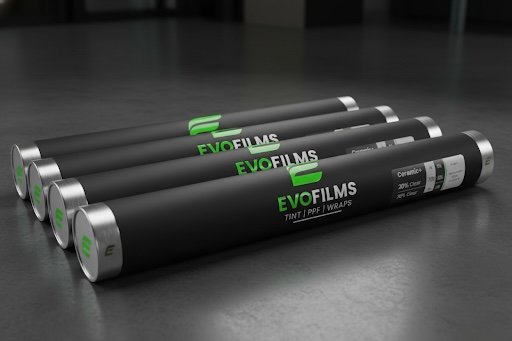
EVOFILMS

Tint | PPF | Wraps

Engineered for Evolution


Dark Tints Do Not Reduce Heat. Why? & How?

The Biggest Myth in the Automotive Tint Industry

Most people believe:

“The darker the tint, the cooler the cabin.”

It sounds logical.
A dark room feels cooler. Dark sunglasses reduce brightness. So naturally, darker films should reject more heat… right?

Wrong.

Darkness and heat rejection are two completely different things.

A film can look extremely dark and still allow huge amounts of heat into the cabin.


Understanding Sunlight: The Real Science

Sunlight is made up of 3 major components:

ComponentEffect
UV RaysDamages skin & interiors
Visible LightBrightness your eyes see
Infrared Radiation (IR)Main source of heat

The important part?

Infrared radiation creates most of the cabin heat.

So a good window film should not simply make the glass darker.
It should block infrared energy.


Why Cheap Dark Films Fail

Most cheap dark films are simply dyed polyester.

They:

  • reduce brightness
  • improve privacy
  • darken the cabin

…but they do NOT effectively reject infrared heat.

Instead:

  • they absorb heat
  • the glass becomes hot
  • heat transfers inside the car

That’s why many cars with extremely dark tints still feel unbearable in Indian summers.


Visual Comparison: Darkness vs Heat Rejection

Ceramic tints vs Darker Tints
Real difference after installing high heat rejecting nano ceramic tints from evofilms.

6


The Real Difference: Dyed vs Nano Ceramic Films

Cheap Dyed Film

  • Dark appearance
  • Basic glare reduction
  • Poor IR rejection
  • Fades over time
  • Traps heat

Nano Ceramic Film

  • Can be light or dark
  • High infrared rejection
  • Better cabin cooling
  • Stable performance
  • No signal interference
  • Superior clarity

Here’s The Shocking Truth

A lighter premium ceramic film can reject MORE heat than a darker cheap film.

For example:

FilmDarknessActual Heat Rejection
Cheap Dyed FilmVery DarkLow
Nano Ceramic FilmMedium ShadeVery High

This surprises most customers because they judge performance visually instead of scientifically.


Real-World Example

Think about clothing.

A black cotton shirt becomes hot quickly under sunlight.

But a high-tech sports jacket with reflective technology stays cooler even if it isn’t dark.

Window films work the same way.

Technology matters more than colour.


Infrared Rejection Explained Visually

best quality nano ceramic tints reduce more heat than ordinary dyed films
Most advanced premium grade nano ceramic tints offers highest amount of heat rejection inside the car.
Nano ceramic tints for cars blocks heavy heat waves and keeps car cabin cooler.

9


Understanding VLT

Darkness is Measured by VLT

VLT = Visible Light Transmission

Lower VLT means:

  • darker appearance
  • less visible light entering

But VLT does NOT measure heat rejection.

Example:

FilmVLTIR Rejection
5% Dark FilmVery Dark35% IR
50% Ceramic FilmLight95% IR

The second film will feel dramatically cooler.


What Actually Matters When Buying Tint?

Instead of asking:

“How dark is it?”

Ask:

1. IRR (Infrared Rejection)

How much infrared heat is blocked.

2. IRER (Infrared Energy Rejection)

Real-world heat performance.

3. TSER (Total Solar Energy Rejection)

Overall solar heat rejection.

4. UV Rejection

Protection for skin, leather, dashboards, and plastics.


Why Premium Films Cost More

High-performance films require:

  • nano ceramic technology
  • multi-layer construction
  • advanced adhesives
  • optical engineering
  • UV stabilizers
  • infrared-selective materials

That’s why genuine premium films cannot be sold at unrealistically cheap prices.

If someone offers:

“Full nano ceramic tint for ₹5,000”

you should question:

  • actual IR performance
  • durability
  • clarity
  • authenticity

Heat Testing & Cabin Comfort

Ceramic tints blocks almost 90% heat and keeps your car cooler
comparison of dyed films vs ceramic films

7


Why Even Dark Cars Still Feel Hot

Window film is only one part of thermal management.

Heat also enters through:

  • windshield exposure
  • metal roof panels
  • dashboard radiation
  • ambient temperature
  • engine heat

So true comfort depends on:

  • film technology
  • installation quality
  • glass coverage
  • overall vehicle insulation

The EVOFILMS Philosophy

At EVOFILMS, we focus on:

  • scientifically tested performance
  • real infrared rejection
  • optical clarity
  • stable adhesives
  • premium nano ceramic technology
  • long-term durability

Because true comfort is not about making the cabin darker.

It is about making the cabin cooler.


Final Verdict

Dark tint reduces brightness.

Technology reduces heat.

Those are NOT the same thing.

The future of automotive window films is:

  • smarter films
  • selective heat rejection
  • nano ceramic technology
  • higher infrared performance

Choose EVOfilms, Choose Quality!


Best Window Tint/Sunfilm for Indian Climate – Complete Buyer Guide

India is not just hot — it’s intensely hot, humid, dusty, and unpredictable.

From Chennai heat to Delhi summers and Mumbai humidity, your car is constantly exposed to:

  • Extreme sunlight
  • High infrared heat
  • UV radiation
  • Dust and pollution
  • Heavy monsoon moisture

So choosing the right window tint is not about looks — it’s about heat management, durability, and long-term performance.

Let’s break down what actually works in Indian conditions.


Why Indian Climate Demands High-Performance Tint

https://cdn-s3.autocarindia.com/legacy/cdni/ExtraImages/20220513054916_Summer%20care.jpg
https://m.media-amazon.com/images/I/71BQd-JHqBL.jpg

In India:

  • Cabin temperatures can exceed 60–70°C
  • Infrared radiation is the main source of heat inside cars
  • UV exposure is extremely high year-round

Window films must:

  • Reject heat (not just darken glass)
  • Handle UV and humidity
  • Stay stable without fading or peeling

Types of Window Tint – What Works & What Doesn’t

1. Dyed Film – Not Suitable for Indian Heat

  • Works by absorbing heat
  • Low heat rejection (IRER ~25–40%) 
  • Fades over time

Verdict:
Cheap, but not effective for Indian climate.


2. Metalized Film – Better, But Not Ideal

  • Reflects heat using metal particles
  • Better than dyed film
  • But causes:
    • Signal interference
    • Reflective look

Verdict:
Decent performance, but outdated for modern cars.


3. Carbon Film – Mid-Level Option

  • Blocks infrared better than dyed
  • No signal interference
  • Matte finish

Verdict:
Good balance, but still not top-tier for extreme heat.


4. Nano Ceramic Tint – Best for Indian Climate ✅

https://deltexfilms.com/cdn/shop/articles/CarWindowTint-640w.webp?v=1736413935

This is where real performance begins.

Why Nano Ceramic is Superior:

  • Blocks infrared heat directly (not just absorbs it)
  • Up to 65–80%+ total heat rejection (TSER)
  • High IR rejection (IRER upto 70%) → cooler cabin
  • 99% UV protection
  • No signal interference
  • Long life (8–10 years)
  • Stable color (won’t turn purple)

Ceramic films are specifically designed for heat-heavy climates, making them ideal for India. 


What Specs Matter for Indian Climate

Choosing the right tint is not about brand — it’s about specifications.

1. TSER (Total Solar Energy Rejection)

  • Most important metric
  • Indicates total heat blocked
  • Good range:
    • 55%–70%+ for Indian climate

Higher TSER = Cooler car 


2. IRER (Infrared Energy Rejection)

  • Measures actual heat rejection
  • Ideal:
    • 60%+ for good performance
    • 70% for premium films

3. UV Rejection

  • Should be 99–100%
  • Protects:
    • Skin
    • Interiors

4. VLT (Visible Light Transmission)

  • Legal + usability factor

Ideal for India:

  • Windshield: 70%
  • Side windows: 50-70%

Remember:

Darker tint ≠ cooler car


Real-World Performance Comparison

Film TypeHeat RejectionDurabilitySignal FriendlySuitable for India
DyedLowLowYes
MetalizedMediumMedium⚠️
CarbonMedium-HighGoodYes
Nano CeramicVery HighExcellentYes✅✅

What Happens If You Choose the Wrong Tint?

  • AC struggles → higher fuel consumption
  • Cabin remains hot
  • Film fades or turns purple
  • Bubbles due to heat stress
  • Poor driving comfort

Cheap tint = false savings


Best Tint Setup for Indian Cars (Recommended)

For maximum performance:

  • Front Windshield: Light ceramic (70% VLT)
  • Side Windows: Medium ceramic (50% VLT)
  • Rear Glass: Medium ceramic (50-70% VLT)

This gives:

  • Heat rejection
  • Legal compliance
  • Clear visibility

Final Verdict

If you live in India, don’t overthink this:

Nano ceramic tint is the best choice for Indian climate.

Because it:

  • Handles extreme heat
  • Works in humidity
  • Lasts long
  • Provides real comfort

Everything else is either:

  • Compromise
  • Outdated
  • Or temporary solution

About EVOFILMS EVOTINT

EVOFILMS nano ceramic films are engineered specifically for Indian conditions:

  • High IRER (upto 70%) for real heat rejection
  • High TSER (upto 75%) for cooler cabins
  • 100% UV protection
  • No signal interference
  • Long-lasting durability

EVOFILMS – Drive the future, with EVOlutionary protection.


Aftercare for Sunfilm / Window Tint – Do’s & Don’ts

Installing window tint (sunfilm) on your car is not the final step — proper aftercare is what determines how long the film lasts, how clear it looks, and whether it peels or not.

Many tint problems like peeling edges, bubbles, scratches, and haziness happen not because of poor film quality, but because of improper care during the first few days after installation or sometime long after.

So if you’ve just tinted your car, this guide is very important.


First 7 Days Are Critical

After installation, the adhesive under the film is still curing. During this time:

  • Small water bubbles may be visible
  • Slight haze may be visible
  • Film may look slightly wavy
  • The vision can look little distorted

This is normal.
The film needs time to dry and bond properly to the glass.

Drying time depends on weather:

  • Summer: 2–4 days
  • Winter / Rainy season: 5–10 days

DO’s – After Installing Window Tint

1. Keep the Windows Closed

Keep windows closed for at least 3–5 days after installation.

If you roll down the window, the film may peel from the edges because the adhesive is still wet.


2. Let the Film Dry Naturally

Do not try to press bubbles or push water out yourself.
The installer has already done the required squeezing.

Remaining moisture will evaporate naturally.


3. Park in the Sun (Not important)

Sunlight actually helps the adhesive cure faster.

If possible:

  • Park the car in sunlight during the day
  • This helps the water evaporate faster and film bond properly

4. Clean Glass Only After One Week

Wait at least 7 days before cleaning the tinted glass.

When cleaning:

  • Use microfiber cloth
  • Use ammonia-free glass cleaner
  • Spray on cloth, not directly on film
  • Most of the times just water is enough to clean the tinted side of the glass

5. Use Soft Cloth Only

Always use:

  • Microfiber cloth
  • specific glass cleaning towels (this avoids streaks)

Never use:

  • Rough cloth
  • Paper napkin
  • Newspaper
  • Scrub pad

These will scratch the hard coat layer.


DON’Ts – Very Important

❌ Don’t Roll Down Windows Immediately

This is the most common mistake customers make.

Result:

  • Film edge peeling
  • Dust entering from edges
  • Permanent damage

❌ Don’t Clean with Colin / Ammonia Cleaners

Cleaners that contain ammonia will damage the film adhesive and hard coat over time.

Use ammonia-free glass cleaners only.


❌ Don’t Press Bubbles with Hand

You may think you are fixing it, but you may actually:

  • Create scratches
  • Create permanent marks
  • Move dust particles and create air pockets

Let bubbles dry naturally.


❌ Don’t Stick Suction Mounts Immediately

Avoid for first 7 days:

  • Mobile holders
  • FASTag
  • GPS holders
  • Suction phone mounts
  • Dashcams (on tinted glass)

The suction can pull the film and create bubbles.


❌ Don’t Use Blade on Tinted Glass

Even for removing stickers — never use blade on tinted glass.
It will permanently damage the film.


Normal Things You May Notice (Don’t Panic)

After installation, it is normal to see:

  • Small water bubbles
  • Foggy appearance
  • Hazy look at night
  • Tiny water pockets

This is called moisture haze and will disappear after drying.

If bubbles are still present after 10–15 days, then you should visit the installer.


Tint Aftercare Summary

Do’sDon’ts
Keep windows closed for 3–5 daysDon’t roll windows down
Park in sunDon’t clean immediately
Clean after 7 daysDon’t use ammonia cleaners
Use microfiber clothDon’t use rough cloth
Let film dry naturallyDon’t press bubbles
Be gentleDon’t use blade on glass

Final Advice

If properly maintained, a good quality nano ceramic tint can last 8–10 years.
But poor maintenance can damage the film in less than a year or two.

So remember:

Tint installation is a one-day job. Tint maintenance is a long-term responsibility.


About EVOFILMS-EVOTINT

EVOFILMS window sunfilms are designed for:

  • High heat rejection
  • 100% UV protection
  • Long-term clarity
  • Durable scratch-resistant coating
  • Long life with proper maintenance

EVOFILMS – Drive the future, with EVOlutionary protection.


Understanding the Difference Between IRR and IRER in Window Films

If you’ve been researching window tint specifications, you’ve probably come across two terms that sound very technical:

IRR – Infrared Rejection
IRER – Infrared Energy Rejection

Many customers — and even some installers — assume both are the same. They are not. Understanding this difference is very important when choosing the right window tint, because these numbers directly relate to how much heat your film actually blocks.

Let’s break this down in simple terms.


First, What is Infrared (IR)?

Sunlight is made up of:

  • UV rays (cause skin damage, fading)
  • Visible light (what we can see)
  • Infrared radiation (HEAT)

Infrared is the main reason your car gets hot.
Not visible light. Not UV. Mostly Infrared heat.

So when we talk about heat rejection, we are mainly talking about infrared rejection.


What is IRR (Infrared Rejection)?

IRR measures how much infrared radiation is blocked at a specific wavelength, usually around 900–1400 nm.

Simple explanation:

IRR is a single-point measurement.

It does not measure the entire heat spectrum — only one small part of it.

Example:

A film may advertise:

IRR = 95%

Sounds amazing, right? But this 95% may be measured only at 940 nm, not across the full infrared range.

This is why IRR alone can sometimes be misleading if used for marketing without context.


What is IRER (Infrared Energy Rejection)?

IRER measures how much total infrared heat energy is rejected across the full infrared spectrum (780 nm to 2500 nm).

This is a much more realistic measurement of actual heat rejection performance.

Simple explanation:

  • IRR = One point
  • IRER = Whole infrared range

So IRER is the more honest real-world heat rejection number.


Real-Life Analogy

Think of it like this:

  • IRR = Your marks in one subject
  • IRER = Your overall average marks

Which one tells the real story?
Overall average → IRER

Same logic applies to window films.


IRR vs IRER – Comparison Table

FeatureIRRIRER
Full formInfrared RejectionInfrared Energy Rejection
MeasurementSingle wavelengthFull IR spectrum
AccuracyLess accurateMore accurate
Marketing useVery commonUsed in premium films
Real heat rejection indicatorNoYes

Then What is TSER?

To make things clearer, there is one more important term:

TSER – Total Solar Energy Rejection

This includes rejection of:

  • UV
  • Visible light
  • Infrared

So:

  • IRR → Small part of IR
  • IRER → Full IR heat
  • TSER → Total heat from sun

In simple terms:

MetricWhat it Measures
IRRInfrared at one wavelength
IRERTotal Infrared heat
TSERTotal solar heat

What Numbers Should You Look For?

When choosing a high-performance nano ceramic film, look for:

  • IRER: Above 60%
  • TSER: Above 55%
  • UVR: 99–100%
  • Glare Reduction: Based on VLT

If a brand only advertises IRR but not IRER, always ask for:

  • Spectral chart (780–2500 nm)
  • TSER report
  • Test report source

Because true heat rejection performance is not measured by IRR alone.


Final Conclusion

If you remember just one thing from this article, remember this:

IRR is a marketing number. IRER is a performance number. TSER is the real-world number.

So when choosing a window tint, don’t just ask:

  • “What is the IRR?”

Instead ask:

  • “What is the IRER?”
  • “What is the TSER?”

That’s how you choose the right film.


About EVOFILMS-EVOTINT

EVOFILMS nano ceramic films are engineered to deliver:

  • High IRER for real heat rejection
  • High TSER for cooler cabins
  • 100% UV protection
  • Clear visibility
  • Long-term durability

EVOFILMS – Drive the future, with EVOlutionary protection.


Dyed vs Metalized vs Nano Ceramic Window Tint – What’s the Real Difference?

When it comes to window tinting, most car owners think tint is just about making the car look cool or dark. But in reality, modern window films are heat management technologies, not just dark stickers for glass.

If you’re planning to tint your car, you’ll usually come across three types of films:

  • Dyed Film
  • Metalized Film
  • Nano Ceramic Film

Let’s break this down in a simple, real-world way so you can choose what’s actually worth your money.


1. Dyed Window Tint – The Basic Film

https://m.media-amazon.com/images/I/61NqG6mHkDL.jpg
https://images.squarespace-cdn.com/content/v1/6149e27ef02cd27e18610ad6/9046790f-397b-4422-a977-e1fe2366fbd7/male-auto-wrapper-with-blade-car-tinting-film-installation-process-tinted-auto-glass-installing-procedure.jpg
https://m.media-amazon.com/images/I/71Z85rFk8%2BL._AC_UF894%2C1000_QL80_.jpg

Dyed film is the most basic and most affordable type of window tint.

How it works:

A layer of dye is added between polyester layers. The dye absorbs sunlight, which reduces brightness inside the car.

Pros:

  • Cheapest tint available
  • Improves appearance
  • Reduces glare
  • Provides some privacy

Cons:

  • Heat rejection is very low
  • Film fades over time (turns purple)
  • Doesn’t block much infrared heat
  • Short lifespan

Best for:

If your goal is only looks and privacy, dyed film is enough. But don’t expect strong heat reduction.


2. Metalized Window Tint – Heat Reflective Film

https://m.media-amazon.com/images/I/61NqG6mHkDL._AC_UF1000%2C1000_QL80_.jpg
https://www.carmeltint.com/images/bmw2-mirror-tint.jpg
https://image.made-in-china.com/202f0j00CZgkLKnGAQbc/Car-Film-High-UV-Rejective-Double-Silver-Metal-Sputter-Film-Protection-Explosion-Proof-Glass-Film-Car-Solar-Tint-Window-Film.webp

Metalized films contain microscopic metal particles that reflect heat and UV rays.

How it works:

The metallic layer reflects solar radiation instead of absorbing it.

Pros:

  • Better heat rejection than dyed film
  • Stronger film structure
  • Doesn’t fade like dyed film
  • Good glare reduction

Cons:

  • Can interfere with mobile signal, GPS, FASTag, radio
  • Highly reflective/shiny appearance
  • Can corrode over time if quality is poor

Best for:

People who want heat rejection on a budget, but signal interference can be a problem in modern cars.


3. Nano Ceramic Tint – Advanced Heat Rejection Technology

window tints and sun films for cars
best sun films/ window tint brand in india
https://www.motoshieldpro.com/cdn/shop/articles/a-man-applying-nano-ceramic-tint-to-a-black-car-window_-featuring-ceramic-car-tinting-for-superior-heat-rejection-and-uv-protection_1000x.jpg?v=1716150129

Nano ceramic film is the latest and most advanced technology in window tinting.

How it works:

The film contains nano-sized ceramic particles that block infrared heat and UV rays without using metal or dye.

It selectively blocks heat, not just darkens the glass.

Pros:

  • Very high heat rejection
  • 99–100% UV protection
  • No signal interference
  • Color stable (won’t fade)
  • Clear visibility even in lighter shades
  • Long lifespan

Cons:

  • More expensive than dyed and metal films

Best for:

People who want maximum heat rejection, comfort, and long-term performance.


Simple Comparison Table

FeatureDyed FilmMetalized FilmNano Ceramic Film
Heat RejectionLowMediumVery High
UV ProtectionMediumHighVery High
Signal InterferenceNoYesNo
FadingYesNoNo
Reflective LookNoYesNo
Lifespan2–3 Years4–6 Years8–10 Years
PriceLowMediumPremium

Real-Life Example

Let’s say you park your car in the sun for 2 hours:

  • Dyed film → Car will still be very hot
  • Metal film → Car will be moderately hot
  • Nano ceramic film → Car will be significantly cooler

That’s the real-world difference.


Final Verdict – Which Tint Should You Choose?

  • If budget is very tight → Dyed film
  • If you want balance → Metalized film
  • If you want the best performance → Nano ceramic film

If you live in a hot country like India, where heat is a real problem for 8–9 months a year, nano ceramic tint is not a luxury — it’s a comfort upgrade.


About EVOFILMS EVOTINT

EVOFILMS nano ceramic films are designed for:

  • Maximum heat rejection
  • 100% UV protection
  • Clear visibility
  • Long-term durability
  • No signal interference

Drive the future, with EVOlutionary protection.