When it comes to window tinting, most car owners think tint is just about making the car look cool or dark. But in reality, modern window films are heat management technologies, not just dark stickers for glass.
If you’re planning to tint your car, you’ll usually come across three types of films:
- Dyed Film
- Metalized Film
- Nano Ceramic Film
Let’s break this down in a simple, real-world way so you can choose what’s actually worth your money.
1. Dyed Window Tint – The Basic Film

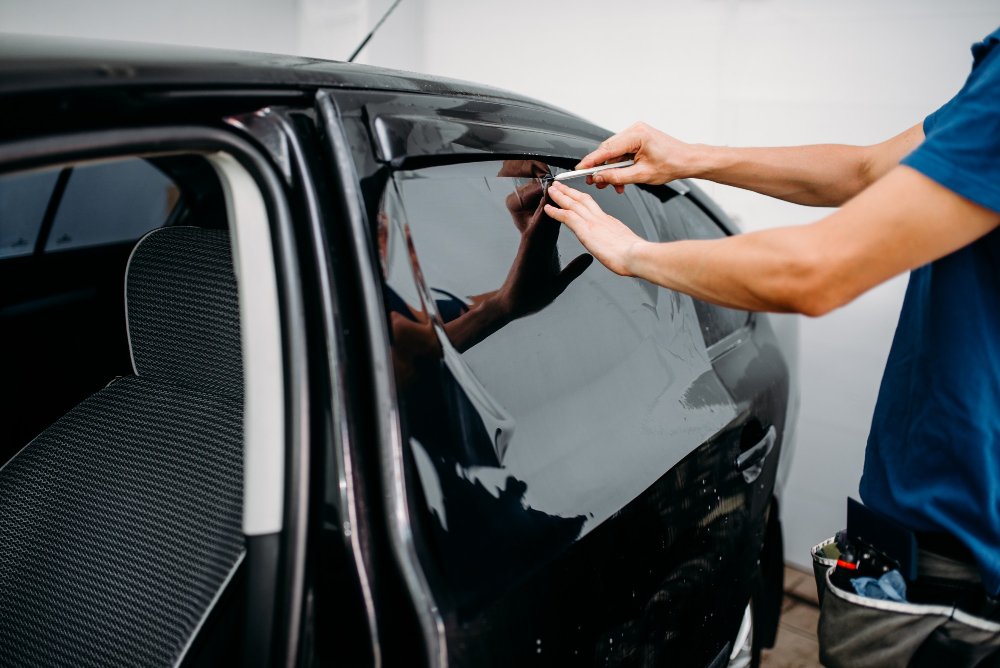

Dyed film is the most basic and most affordable type of window tint.
How it works:
A layer of dye is added between polyester layers. The dye absorbs sunlight, which reduces brightness inside the car.
Pros:
- Cheapest tint available
- Improves appearance
- Reduces glare
- Provides some privacy
Cons:
- Heat rejection is very low
- Film fades over time (turns purple)
- Doesn’t block much infrared heat
- Short lifespan
Best for:
If your goal is only looks and privacy, dyed film is enough. But don’t expect strong heat reduction.
2. Metalized Window Tint – Heat Reflective Film


Metalized films contain microscopic metal particles that reflect heat and UV rays.
How it works:
The metallic layer reflects solar radiation instead of absorbing it.
Pros:
- Better heat rejection than dyed film
- Stronger film structure
- Doesn’t fade like dyed film
- Good glare reduction
Cons:
- Can interfere with mobile signal, GPS, FASTag, radio
- Highly reflective/shiny appearance
- Can corrode over time if quality is poor
Best for:
People who want heat rejection on a budget, but signal interference can be a problem in modern cars.
3. Nano Ceramic Tint – Advanced Heat Rejection Technology
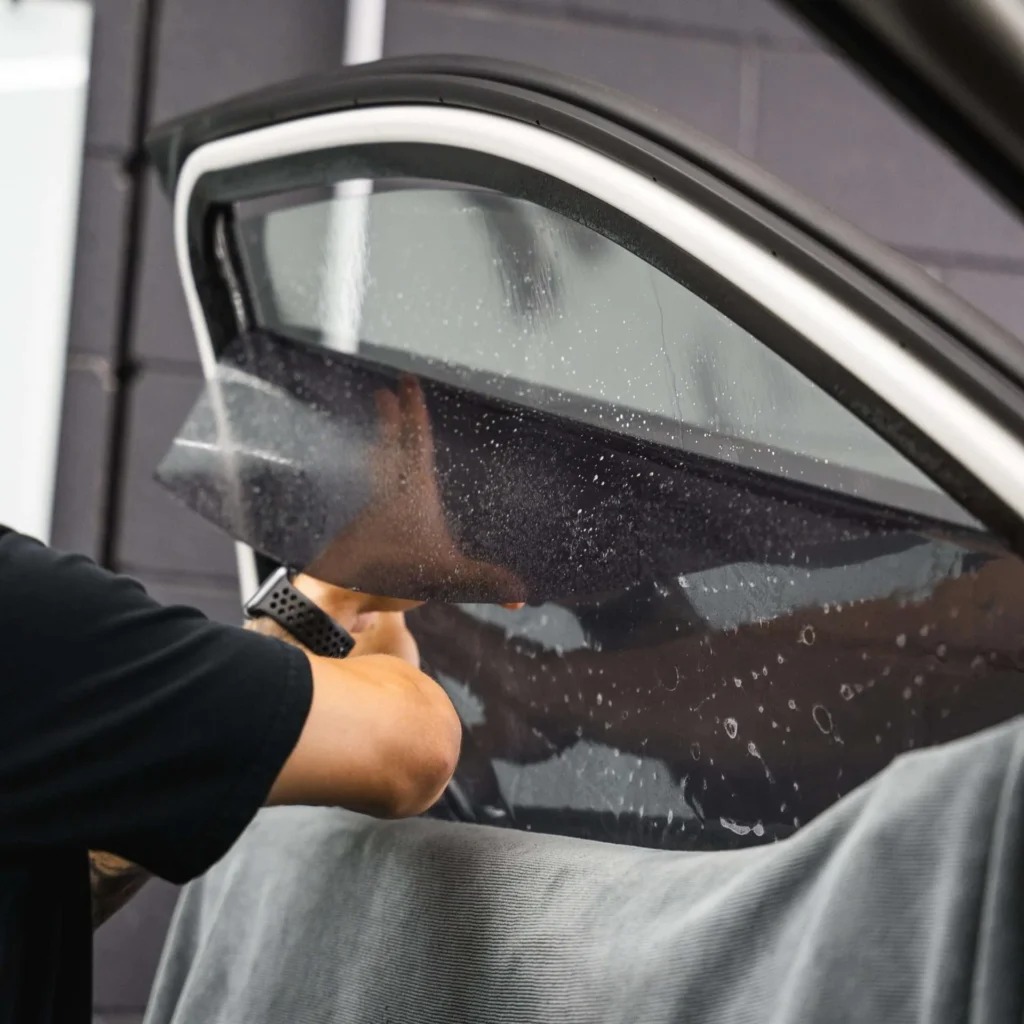
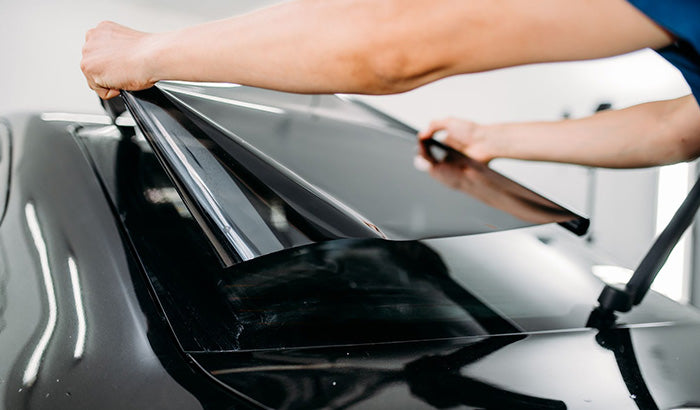
Nano ceramic film is the latest and most advanced technology in window tinting.
How it works:
The film contains nano-sized ceramic particles that block infrared heat and UV rays without using metal or dye.
It selectively blocks heat, not just darkens the glass.
Pros:
- Very high heat rejection
- 99–100% UV protection
- No signal interference
- Color stable (won’t fade)
- Clear visibility even in lighter shades
- Long lifespan
Cons:
- More expensive than dyed and metal films
Best for:
People who want maximum heat rejection, comfort, and long-term performance.
Simple Comparison Table
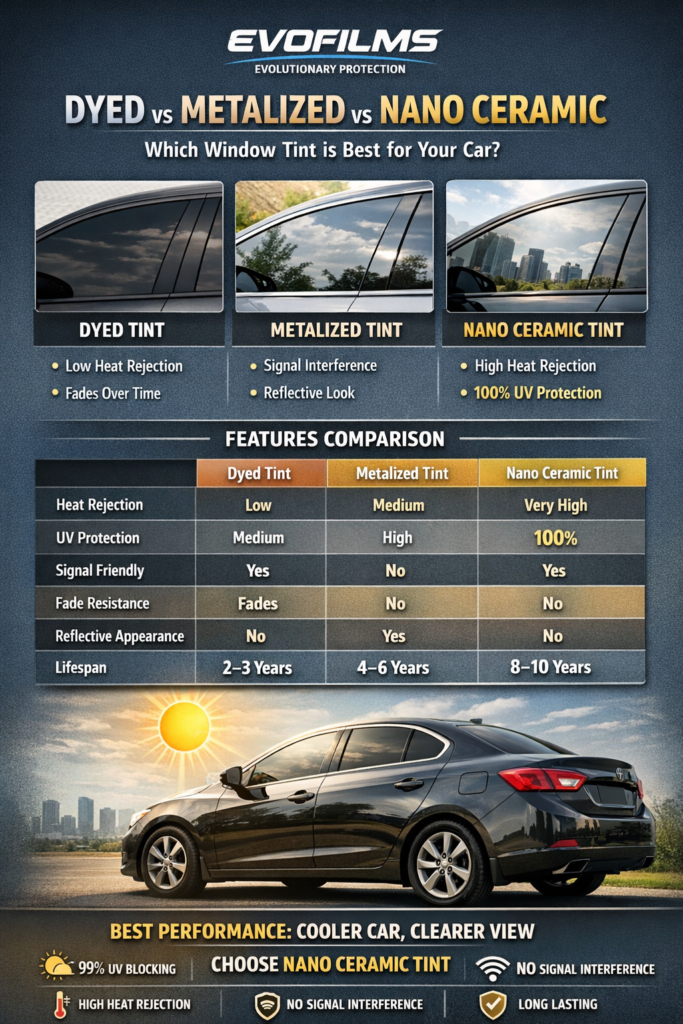
| Feature | Dyed Film | Metalized Film | Nano Ceramic Film |
|---|---|---|---|
| Heat Rejection | Low | Medium | Very High |
| UV Protection | Medium | High | Very High |
| Signal Interference | No | Yes | No |
| Fading | Yes | No | No |
| Reflective Look | No | Yes | No |
| Lifespan | 2–3 Years | 4–6 Years | 8–10 Years |
| Price | Low | Medium | Premium |
Real-Life Example
Let’s say you park your car in the sun for 2 hours:
- Dyed film → Car will still be very hot
- Metal film → Car will be moderately hot
- Nano ceramic film → Car will be significantly cooler
That’s the real-world difference.
Final Verdict – Which Tint Should You Choose?
- If budget is very tight → Dyed film
- If you want balance → Metalized film
- If you want the best performance → Nano ceramic film
If you live in a hot country like India, where heat is a real problem for 8–9 months a year, nano ceramic tint is not a luxury — it’s a comfort upgrade.
About EVOFILMS EVOTINT
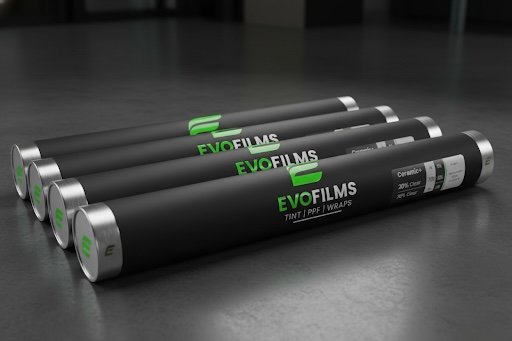
EVOFILMS nano ceramic films are designed for:
- Maximum heat rejection
- 100% UV protection
- Clear visibility
- Long-term durability
- No signal interference
Drive the future, with EVOlutionary protection.